Wondering whether high-rise living in Fort Lee is the right fit for your next move? If you want skyline views, easier access to New York City, and a more full-service home experience, Fort Lee stands out in Bergen County for a reason. The key is knowing how condos, co-ops, amenities, monthly costs, and building rules actually work before you commit. Let’s dive in.
Why Fort Lee attracts high-rise buyers
Fort Lee’s high-rise appeal starts with location. The borough sits on the Hudson Palisades, which gives many buildings the kind of Hudson River and Manhattan skyline views that buyers actively seek out.
It also offers strong access to New York City. The George Washington Bridge is the borough’s best-known connection, and NJ Transit lists Fort Lee bus service on routes including 156R, 158, and 159R toward New York City.
That combination of views and commuting convenience shapes the lifestyle here. Fort Lee can feel like a practical middle ground if you want an urban-style residential setting without Manhattan pricing.
What high-rise living looks like
In Fort Lee, many towers sell more than square footage. They market a service-oriented lifestyle that can include staffed lobbies, amenity floors, on-site parking, and shared spaces designed for convenience.
That matters because your day-to-day experience may depend as much on the building as the unit itself. Two homes with similar layouts can feel very different if one offers concierge support, fitness space, and secure parking while the other keeps things simpler.
Common amenities in Fort Lee towers
Amenity packages vary, but several Fort Lee buildings show clear patterns. Features commonly advertised in local high-rises include:
- 24-hour doorman or concierge service
- Gatehouse or controlled building access
- Garage or controlled-access parking
- Rooftop decks or club spaces
- Outdoor pools
- Fitness or exercise rooms
- On-site management or security
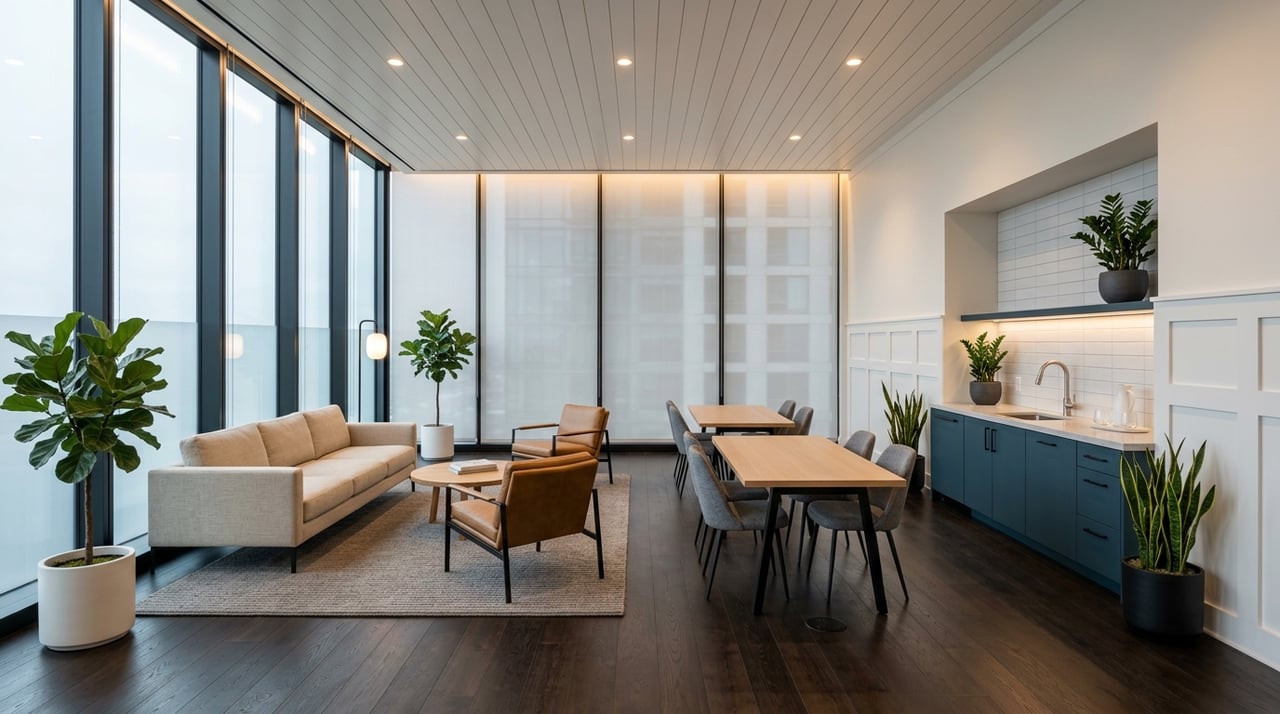
- Coworking or resident lounge areas
- Storage options
- Pet-friendly policies with restrictions
For example, Royal Buckingham advertises a 24-hour gatehouse and doorman, concierge service, valet garage parking, a rooftop club with pool and exercise space, storage, and pet-friendly rules. Modera Fort Lee highlights a rooftop deck, outdoor pool, fire pit, dog run, pet spa, coworking areas, EV charging, and controlled-access parking.
Hudson Lights emphasizes 24-hour concierge service, a pool, a fitness center, garage parking, shuttle access to New York City, and building pet rules. Co-op buildings such as Northbridge Park and The Pembroke also show that full-service living is not limited to condos.
Condos vs co-ops in Fort Lee
If you are shopping Fort Lee high-rises, one of the biggest things to understand is whether a building is a condo or a co-op. That difference affects ownership, monthly charges, approval processes, and how flexible the building may feel.
According to the research provided, condo owners hold title to an individual unit plus a shared interest in common areas. Co-op residents own shares in the corporation that owns the building and lease a specific apartment through that corporation.
Why that difference matters to you
In practical terms, condos and co-ops can lead to very different experiences. A condo purchase may feel more familiar to many buyers, while a co-op often comes with a different approval structure and a monthly payment that may bundle in more expenses.
That is why you should never compare buildings based on sale price alone. The ownership type can affect your financing approach, monthly budget, board review, and future resale experience.
Fort Lee prices and monthly costs
Fort Lee offers a broad range of entry points. Zillow places the borough’s median sale price at $459,500 as of March 31, 2026, and its average home value at $588,226, up 5.7% year over year.
Realtor.com reports that homes sold for 3.9% below asking on average in May 2026 and labels Fort Lee a buyer’s market. That does not guarantee a deal in every building, but it does suggest buyers may have room to negotiate depending on the property and terms.
Condo examples show a wide range
Public listing examples in the research report show how much pricing and maintenance can vary from building to building. A 1-bedroom condo at Fountain View Gardens is listed at $332,900 with $306.75 per month maintenance that includes heat, hot water, gas, pool access, one outdoor parking space, and common-area maintenance.
A 2-bedroom Fountainview listing on NJMLS shows $424.72 per month maintenance plus $35 for parking. At the higher end, an NJMLS Buckingham Tower condo is listed at $595,000 with $1,364 per month maintenance, with garage parking available for an added fee.
Co-op carrying costs work differently
Co-op monthly charges can look higher at first glance because they often bundle in more line items. A co-op listing at 2185 Lemoine Avenue shows $1,686.26 per month maintenance including real estate taxes, all utilities, cable, and amenities, plus $65 per month for one outdoor parking space.
Hudson Terrace, a 5-story co-op community, describes monthly maintenance as tied to the corporation’s operating requirements, with part of that maintenance going into reserves. That is one reason side-by-side comparisons between condos and co-ops need context.
Smaller-scale alternatives in Fort Lee
Not every buyer wants a true tower lifestyle. Fort Lee also has lower-rise condo and co-op options that may appeal if you want a more modest amenity package and a quieter scale.
Hudson Terrace is a 5-story co-op community with reserved parking, heat and hot water included, and relatively low maintenance. Fountain View Gardens is a garden-style condo community with a pool, one outdoor parking space, and on-site laundry.
These properties usually trade some full-service features for lower monthly overhead and a simpler setup. If you do not need a rooftop club, concierge desk, or valet parking, these alternatives may be worth a close look.
Pet rules can shape your search
If you have a dog or cat, pet policy should be one of your first filters. In Fort Lee, pet rules are building-specific, not borough-wide.
Hudson Lights allows cats and dogs but requires leashes and reserves the right to deny aggressive breeds. The Addison describes itself as pet-friendly but includes weight limits and fees, while Royal Buckingham also allows pets with restrictions.
The takeaway is simple: verify the exact rules early. A building may be called pet-friendly, but that can still mean limits on size, breed, number of pets, or added fees.
Parking and transit matter more than you think
In a high-rise community, parking is not just a nice extra. In Fort Lee, it can be one of the biggest practical parts of your decision.
The borough’s residential parking rules require permits in designated zones on weekdays. The Parking Authority also notes that monthly permits can be used in municipal lots, including Guntzer Street Garage and the Fletcher Avenue angle parking area.
Questions to ask about parking
Before you make an offer, get clear answers on the details that affect daily life:
- Is parking included, assigned, valet, deeded, leased, or waitlisted?
- Is the space indoor or outdoor?
- What is the monthly parking fee?
- Are guest spaces available?
- Are there EV charging options?
- If the building has a garage or parking deck, has it been inspected as required?
That last question matters because Fort Lee adopted a 2025 ordinance requiring inspections of parking structures. In buildings with attached garages or large shared decks, this is an important part of due diligence.
Due diligence is everything in a high-rise
Views and amenities can be exciting, but the smartest buyers look deeper. In Fort Lee, high-rise living is as much about governance, reserves, and maintenance planning as it is about the apartment itself.
The research report notes that buyers should review the offering plan carefully and not rely on brochures or verbal promises for amenities, parking, or rooftop features. For existing buildings, reviewing board minutes and financial reports can help you spot defects, planned repairs, or bigger capital projects.
What to review before buying
A strong review process often includes:
- Building financial reports
- Board minutes
- Reserve information
- Rules for pets, renovations, and move-ins
- Parking terms and fees
- Amenity rules and hours
- Any known repair projects or assessments
This has become even more important because New Jersey’s structural-integrity law now requires reserve studies, 30-year funding plans, and periodic structural inspections for covered condo and co-op buildings. In other words, reserve health should never be treated like a side issue.
Who Fort Lee high-rise living fits best
Fort Lee high-rises often appeal to buyers and renters who want convenience, commuter access, and a more urban feel. If you work in New York City or spend time across Hudson County, the location and transit access can be a major advantage.
This lifestyle may also appeal if you value amenities and service. A doorman, pool, fitness room, package handling, and garage parking can make daily routines easier, especially if you are moving from a rental building with similar perks.
On the other hand, Fort Lee high-rise living may be less ideal if your top goal is very low monthly carrying costs, minimal association rules, or broad flexibility on pets and renovations. Those details vary sharply by building, and they should be weighed carefully against the purchase price.
How to evaluate the right building
The best way to approach Fort Lee high-rises is to compare buildings, not just listings. A lower purchase price is not always the better value if the monthly costs, reserve strength, parking setup, or rules create friction later.
This is where practical guidance matters. When you look at towers and co-ops through the lens of total monthly cost, building condition, and resale potential, it becomes much easier to narrow your options with confidence.
If you are exploring Fort Lee condos or co-ops, it helps to work with someone who can look beyond the lobby and the view. Christopher Falborn can help you compare buildings, understand the numbers, and find a property that fits your commute, budget, and long-term goals.
FAQs
What is high-rise living like in Fort Lee, NJ?
- High-rise living in Fort Lee often means condo or co-op buildings with amenities such as doorman service, pools, fitness rooms, garage parking, and commuter-friendly access to New York City.
What is the difference between a Fort Lee condo and a Fort Lee co-op?
- In Fort Lee, a condo usually means you own your individual unit, while a co-op means you own shares in the corporation that owns the building and lease a specific apartment from that corporation.
Are Fort Lee high-rise buildings pet-friendly?
- Some Fort Lee high-rise buildings allow pets, but rules are building-specific and may include leash rules, breed restrictions, weight limits, fees, or limits on the number of pets.
How much do Fort Lee condos cost?
- The research report shows a broad range, with example listings from the low $300,000s to around $595,000, while Zillow places Fort Lee’s median sale price at $459,500 as of March 31, 2026.
Why are Fort Lee monthly maintenance fees so different?
- Monthly charges vary because buildings offer different amenities, parking arrangements, reserve funding, and ownership structures, and co-op fees may bundle in items like taxes, utilities, cable, and amenities.
Is Fort Lee a good choice for NYC commuters?
- Fort Lee can be a practical option for NYC commuters because of its access to the George Washington Bridge and NJ Transit bus routes including 156R, 158, and 159R toward New York City.