Thinking about trading stairs, yard work, and constant upkeep for something simpler? If you are downsizing in Fort Lee, a condo or co-op can offer a more manageable lifestyle, but the right move depends on more than just square footage and price. You also need to understand fees, building finances, parking, and how the town works day to day. Let’s dive in.
Why Fort Lee appeals to downsizers
Fort Lee gives you a mix of convenience, housing choice, and access that stands out in Bergen County. Recent market snapshots show meaningful inventory, which can give you more room to compare layouts, monthly costs, and building condition before making a decision. In May 2026, Realtor.com reported 198 homes for sale in Fort Lee, a median listing price of $375,000, about 41 days on market, and a buyer's market.
If you are focused specifically on condos, there are options across a wide price range. Redfin reported 52 condos for sale with a median listing price of $349,000, with examples ranging from about $300,000 for one-bedroom units to luxury homes above $2 million. That variety matters when you are trying to balance lifestyle, budget, and long-term comfort.
Fort Lee also works well if you want to stay connected to New York City. The borough sits next to the George Washington Bridge, and Fort Lee notes that more than 287,000 vehicles cross it on an average day, which helps explain why traffic is a real factor in daily life. At the same time, NJ Transit bus routes serving Fort Lee connect to the Port Authority Bus Terminal and George Washington Bridge Bus Station, which can be useful if you still commute or want easy city access.
Condo vs. co-op ownership
Before you fall in love with a building, it helps to understand what you are actually buying. A condo and a co-op can look similar on the surface, but the ownership structure and monthly costs are different.
In a condo, you own the unit itself and pay association dues that support shared building expenses. In a co-op, you buy shares in the corporation that owns the building and receive a long-term proprietary lease for the apartment. According to the New York Attorney General, co-op maintenance charges are based on the number of shares allocated to your unit.
That difference can shape everything from your monthly budget to how the building is run. It is one reason downsizers should compare not just the asking price, but also the ownership model, fee structure, and rules that come with each option.
What your monthly budget may look like
One of the biggest surprises for downsizers is that a lower purchase price does not always mean a lower monthly cost. Monthly housing expenses in a condo or co-op often include more moving parts than buyers expect.
The Consumer Financial Protection Bureau notes that condo, co-op, and HOA fees are usually paid separately from the mortgage, and they can range from a few hundred dollars a month to more than $1,000. Your mortgage payment will typically include principal, interest, taxes, and homeowners insurance through escrow, while building dues are added on top when applicable. In some buildings, those dues may also support master insurance for common areas.
That is why you should always ask what the monthly fee actually covers. A higher fee is not automatically a bad deal if it includes meaningful building services or helps fund major upkeep responsibly. The goal is to understand the full cost of ownership, not just the listing price.
Why reserves and assessments matter
If you are downsizing for simplicity, the last thing you want is a surprise bill after closing. Building finances are one of the most important parts of your due diligence.
New Jersey's Department of Community Affairs includes condos, cooperatives, and mutual housing corporations under the Hotel and Multiple Dwelling Law, which means these buildings are subject to cyclical inspections and correction of cited violations. The state's structural integrity and reserve funding guidance also shows why reserve planning matters. Associations are expected to maintain a reserve study and a 30-year funding plan, so buyers should ask whether reserves are being funded as recommended and whether any special assessment or loan is under discussion.
This is where a practical review can save you money and stress. If a building has weak reserves, delayed repairs, or a history of major projects without strong planning, your future monthly cost could change quickly.
What to review before you buy
A smaller home can absolutely mean an easier life, but only if the building is solid and the unit works for your daily routine. When you review a Fort Lee condo or co-op, look beyond finishes and views.
The New York Attorney General's buyer guidance recommends reviewing the offering plan, board minutes, and financial reports. Those documents can reveal whether the building has faced or is planning major work such as facade repairs, roof work, elevator repairs, plumbing upgrades, electrical upgrades, or boiler replacement. These are often the projects that drive future costs.
It helps to keep your review focused on a simple checklist:
- Monthly fee amount and what it covers
- Reserve study and long-term funding plan
- Any pending or likely special assessments
- Recent or upcoming capital projects
- Parking availability and cost
- Storage space and how usable it really is
- Rules for pets, rentals, and renovations
- Elevator access and day-to-day building convenience
These details often matter more than staged photos when you are choosing a home for the next chapter.
Features that matter after downsizing
When you move from a house to a condo or co-op, your priorities often shift. Extra bedrooms may matter less, while layout, access, storage, and ease of living become much more important.
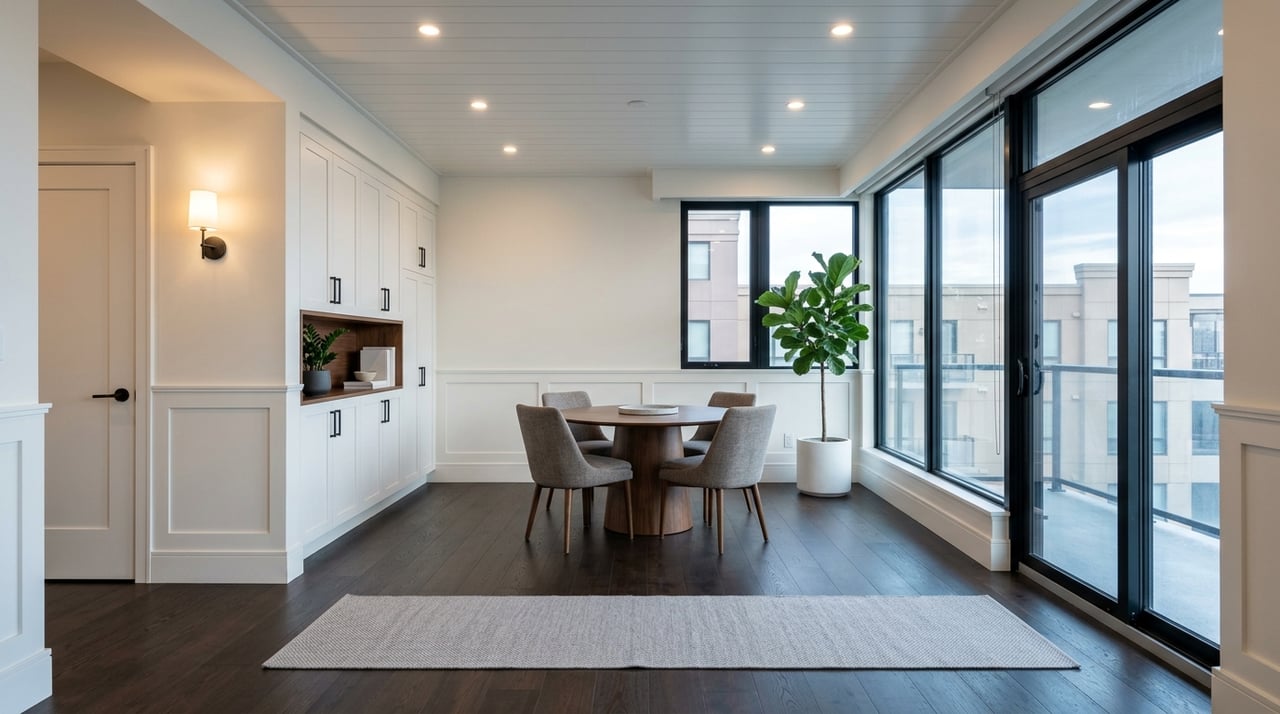
A one-level floor plan, wider rooms, good natural light, enough closets, and easy elevator access can make a big difference in how comfortable the home feels over time. Usable outdoor space can also add value to daily life, especially if you are used to having a yard or patio.
Some Fort Lee buildings are designed around a more amenity-rich lifestyle. Horizon House, for example, highlights features such as extra-large rooms, plenty of closets, on-site parking, thick walls for privacy, 24-hour security, pools, tennis, basketball, and a gym in every building. You may not need every amenity, but buildings with stronger on-site features can help replace some of the convenience you are leaving behind in a house.
Fort Lee parking is part of the decision
In Fort Lee, parking is not a side detail. It is part of the budget and part of everyday life.
The borough requires residential parking registration in designated zones and offers two free visitor permits per household. Residential permits cost $5 per vehicle for two years, and monthly garage permits are listed at $200. The borough also uses metered parking, residential permit zones, and a traffic-pass system for residents and employees during heavy bridge congestion.
That makes it important to verify a few practical points before you buy:
- Is parking included with the unit?
- Is guest parking available?
- Are there move-in or delivery restrictions?
- Will you need a monthly garage permit?
- How will bridge traffic affect your routine?
If you are downsizing partly to make life easier, these answers matter just as much as the floor plan.
Senior services can support car-light living
If you are planning for the next decade, not just the next move, Fort Lee offers services that may add real peace of mind. The borough's support network is a meaningful advantage for seniors and future seniors.
Fort Lee offers a senior center, free jitney service for residents age 55 and over on designated routes, free non-emergency medical transportation on certain days, and senior housing resources through the Housing Authority, including Harry Holtje House, Malcolm Towers, and Mediterranean House. The borough also provides free bus trips to shopping destinations such as Bergen Town Center, Acme, Target, Trader Joe's, and Walmart.
These services can make a more car-light lifestyle realistic for some residents. If convenience and long-term flexibility are part of your downsizing plan, this local support is worth factoring into your search.
How to choose the right Fort Lee building
The best downsizing move is not always the cheapest unit or the newest lobby. It is the home that fits how you actually want to live.
Start by defining your non-negotiables. You may care most about elevator access, one-level living, transit options, on-site parking, predictable monthly costs, or building amenities that reduce your need for private space and maintenance. Once that list is clear, you can compare buildings more confidently and avoid paying for features that do not improve your daily life.
A thoughtful purchase in Fort Lee means balancing price, fees, reserves, parking, and lifestyle fit. With meaningful inventory and a range of condo and co-op options, you have the chance to be selective and focus on what will serve you best over the long term.
If you are weighing a move to a Fort Lee condo or co-op, having a practical advisor can make the process much easier. Christopher Falborn can help you compare buildings, understand the tradeoffs, and make a confident move that fits your goals.
FAQs
What is the difference between a Fort Lee condo and a Fort Lee co-op?
- In a condo, you own the unit and pay association dues for shared expenses. In a co-op, you buy shares in the corporation that owns the building and receive a proprietary lease for the apartment.
What should you ask about monthly fees in a Fort Lee condo or co-op?
- Ask what the monthly fee covers, whether it includes any insurance for common areas, and whether the building is discussing any fee increases, special assessments, or loans.
Why do reserves matter when buying a Fort Lee condo or co-op?
- Reserve strength matters because buildings are expected to plan for long-term repairs and capital needs, and weak reserves can increase the risk of future special assessments.
How important is parking when downsizing in Fort Lee?
- Parking is very important because Fort Lee has residential permit rules, metered areas, monthly garage costs, and bridge-related traffic patterns that can affect daily convenience.
What Fort Lee features matter most for downsizers?
- Many downsizers prioritize one-level layouts, elevator access, good storage, natural light, usable outdoor space, understandable monthly costs, and amenities that reduce maintenance.
What local services may help seniors living in Fort Lee?
- Fort Lee offers a senior center, free jitney service for eligible residents age 55 and over, certain non-emergency medical transportation, shopping trips, and senior housing resources through the Housing Authority.